

Eye Movement Desensitization and Reprocessing (EMDR)
 What is EMDR?
Eye Movement Desensitization and Reprocessing (EMDR) is an evidence-based therapy that helps people heal from traumatic experiences and distressing memories.
Unlike traditional talk therapy, EMDR uses a structured process involving bilateral stimulation, such as guided eye movements, tapping, or sounds, which helps the brain reprocess painful memories.
When a person goes through trauma, memories can become “stuck,” replaying as flashbacks, nightmares, or intense emotional reactions. EMDR helps the brain store these memories in a healthier way so they lose their power, allowing you to move forward without being hijacked by the past.
How does EMDR work?
During an EMDR session, you are guided to recall a specific memory while simultaneously engaging in bilateral stimulation. This process helps your brain refile the memory from a raw, unprocessed state into a resolved one.
You remain in control throughout the session. EMDR does not erase your memory, but it reduces the emotional intensity and physical distress tied to it.
Over time, the memory becomes less triggering. Instead of reliving the trauma, you can remember it as something that happened, without it defining your present.
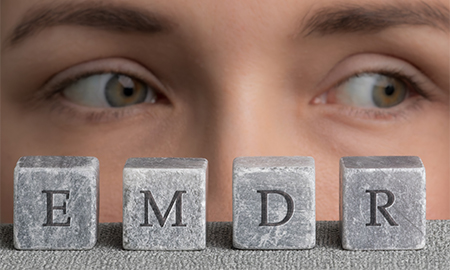 EMDR focuses on stress-related problems.
It is a therapeutic approach most widely known for treating Post-Traumatic Stress Disorder (PTSD), but it can also be highly effective for:
● Combat trauma and first responder stress
● Childhood abuse or neglect
● Car accidents, medical trauma, or assaults
● Anxiety and panic attacks; grief and complicated loss
● Phobias or intense fears; performance anxiety in high-stress professions
EMDR offers many benefits.
Fast and effective – Many people notice improvement more quickly than with traditional talk therapy.
Evidence-based – It is backed by decades of research and endorsed by organizations like the American Psychiatric Association, the VA, and the World Health Organization.
Non-invasive – You don’t have to describe every detail of your trauma; the focus is on the brain’s natural ability to heal.
Empowering – You remain in control and learn to see yourself as more than your trauma.
 Here’s what to expect in a session.
Your first sessions will focus on building safety and trust, reviewing your history, and creating a plan together.
Once you’re ready, I’ll guide you step by step through EMDR processing.
At every stage, you’ll be supported and never pushed beyond what feels safe.
Many clients describe feeling lighter, calmer, and more at peace after treatment.
EMDR helps Veterans, First Responders, and Trauma Survivors.
As a Gulf War veteran and retired paramedic, I understand how trauma can live in the body long after the crisis is over.
EMDR offers a path to release those memories, allowing you to sleep better, feel calmer, and reconnect with the people and activities that matter most.